
DAKSHA MISSION / VR LEARNING PLATFORMDAKSHA
DAKSHA
IN ORBIT.
A VR platform for satellite education and outreach.
Explore the mission ↓01 / THE OPPORTUNITYA COMPLEX
A COMPLEX
INSTRUMENT.
A CLEARER WAY IN.
Bring the mission and its subsystems into a shared virtual environment.
02 / BENEATH THE SURFACEEVERY PART.
EVERY PART.
IN CONTEXT.
Separate the layers. See how each component belongs to the whole.
01 / Structure02 / Detectors03 / Battery packs
The model studies ↗03 / THE LEARNING EXPERIENCEEXPLORE.
EXPLORE.
INSPECT.
ASSEMBLE.
Four modes connect the satellite, its structure, and the people behind it.
Follow the design process ↓DAKSHA IN ORBIT / 2026
From research to interaction.
- DESIGN
- Mukil Kumar
- GUIDANCE
- Prof. Jayesh Pillai
- CLIENT
- Prof. Varun Bhalerao
- CONTEXT
- IDC, IIT Bombay
01 / THE BRIEF
Make the mission approachable.
A VR learning platform for students and newcomers to explore Daksha’s structure, components, and mission.

- 01Research
- 02Explore concepts
- 03Build & iterate
- 04Test
02 / RESEARCH
Understand the instrument.
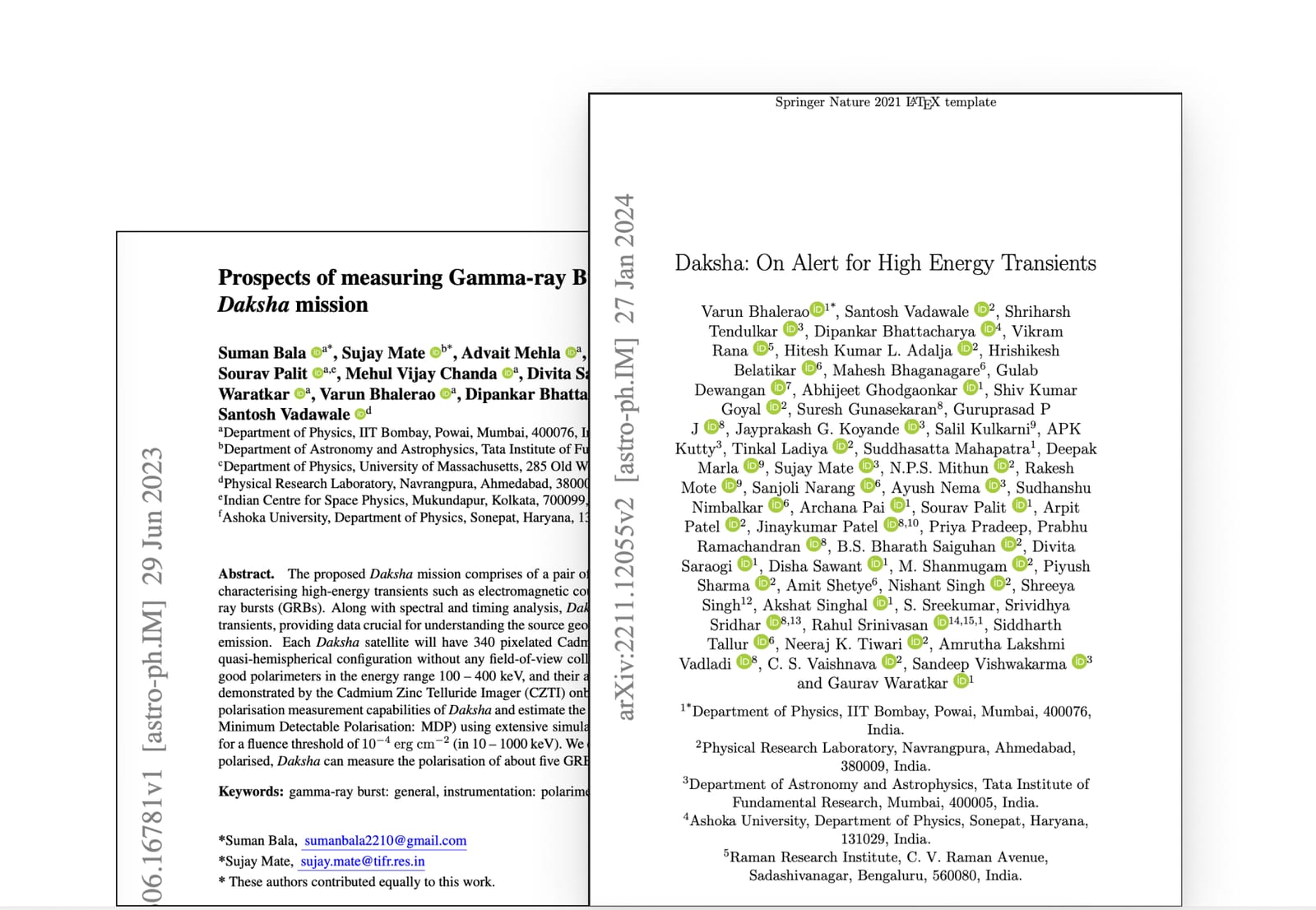
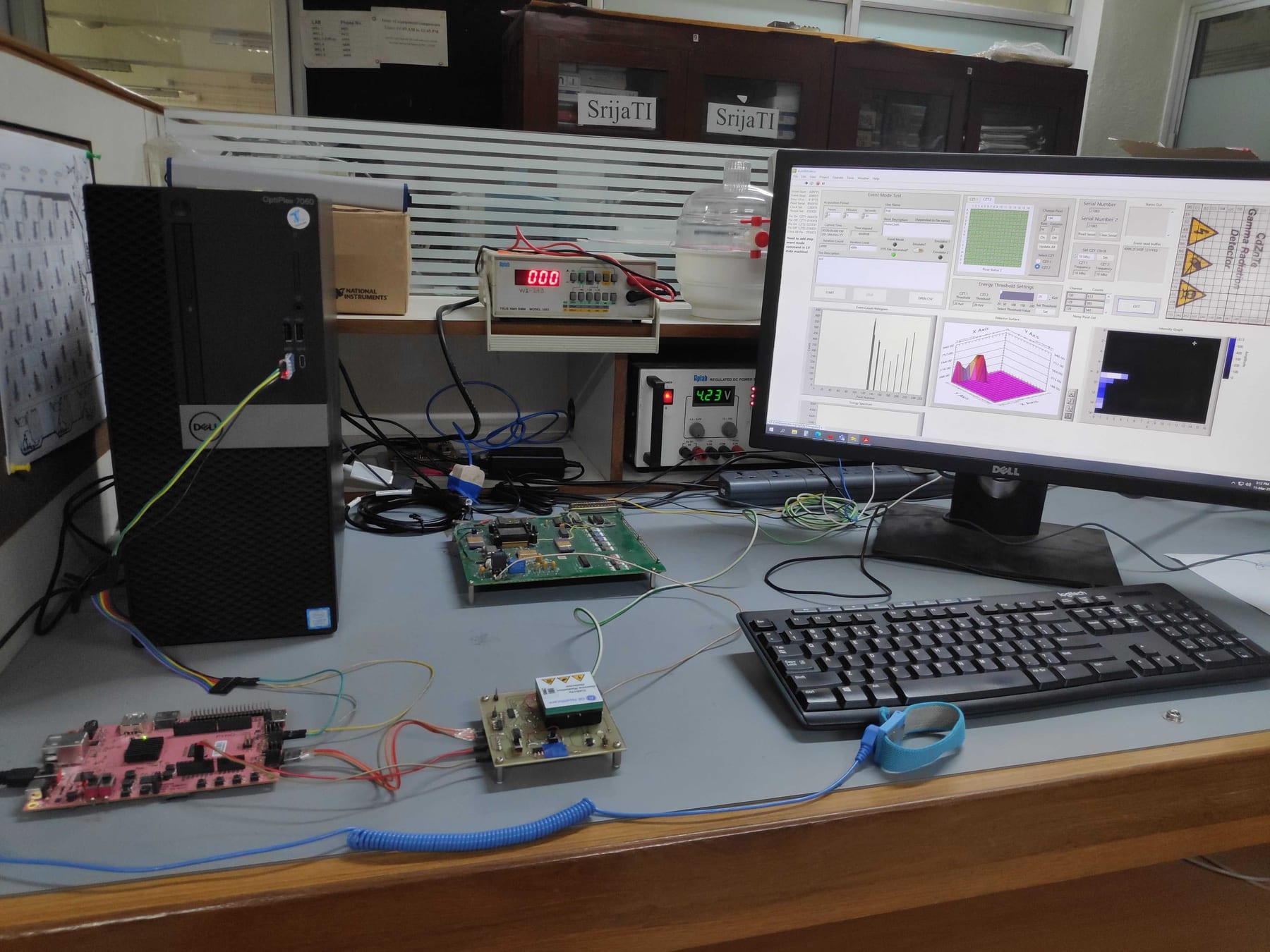
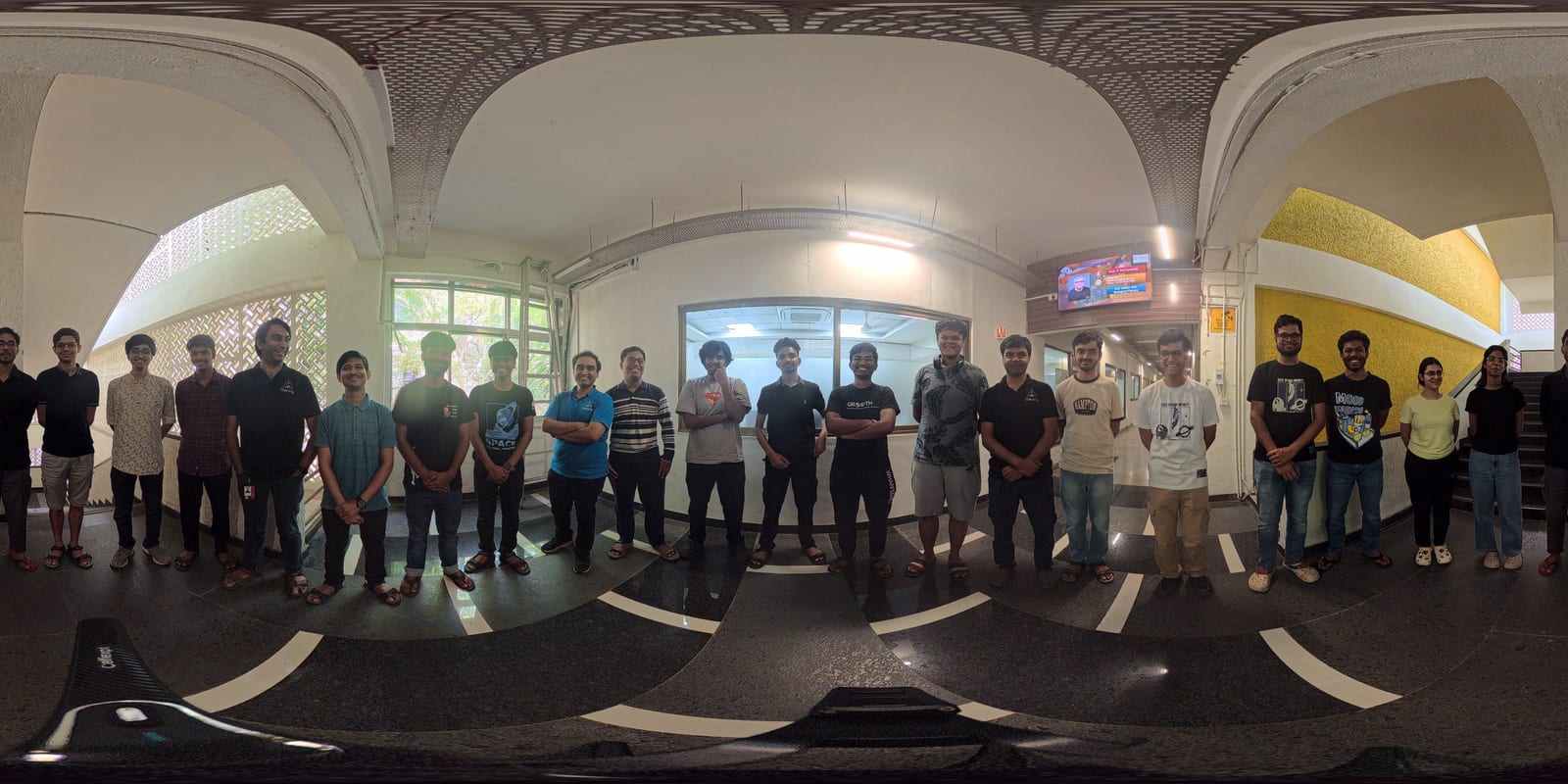
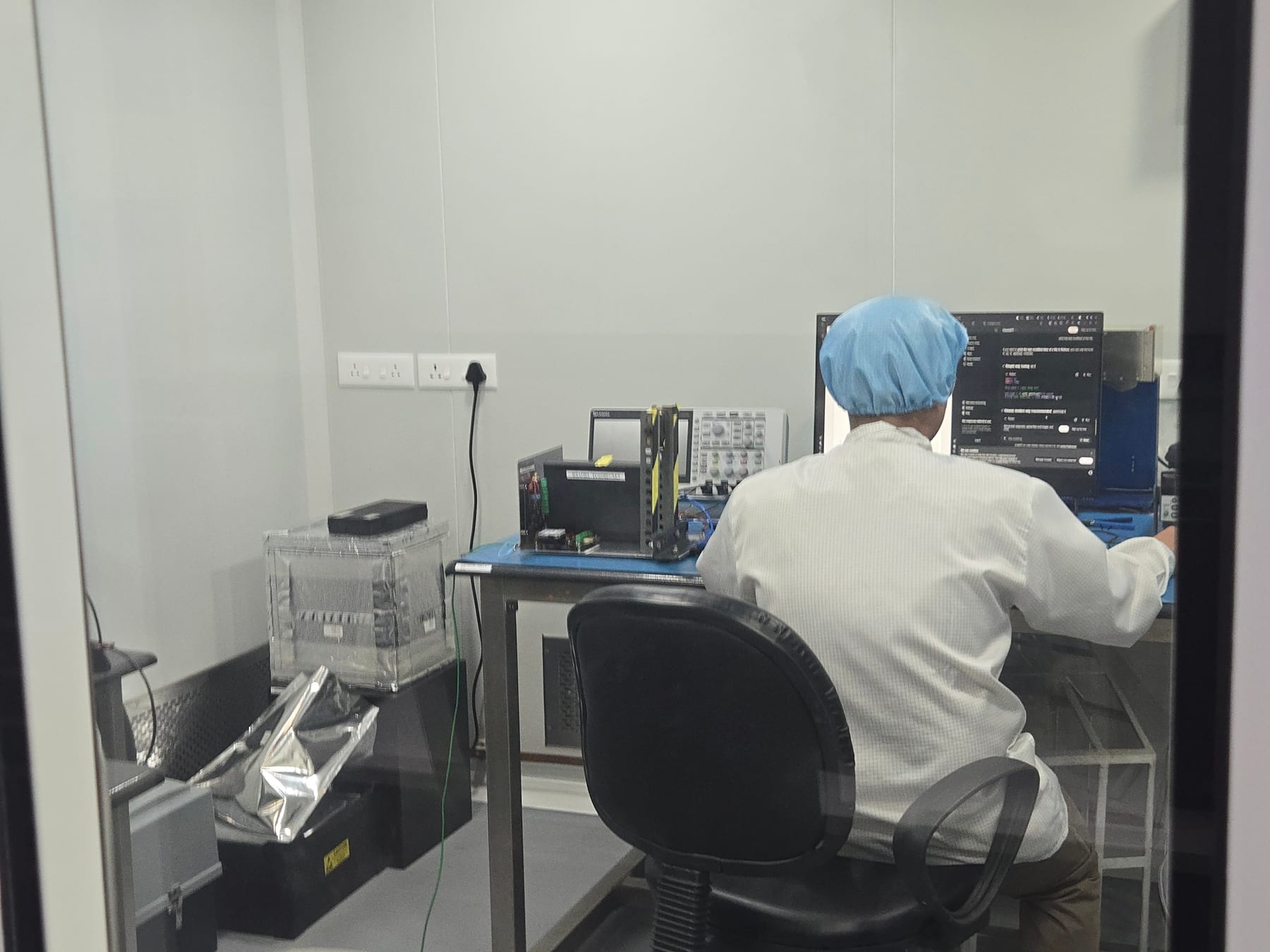
Mission papers, laboratory visits, and the Daksha team grounded the experience in the actual satellite.
03 / INTERACTION CONCEPTS
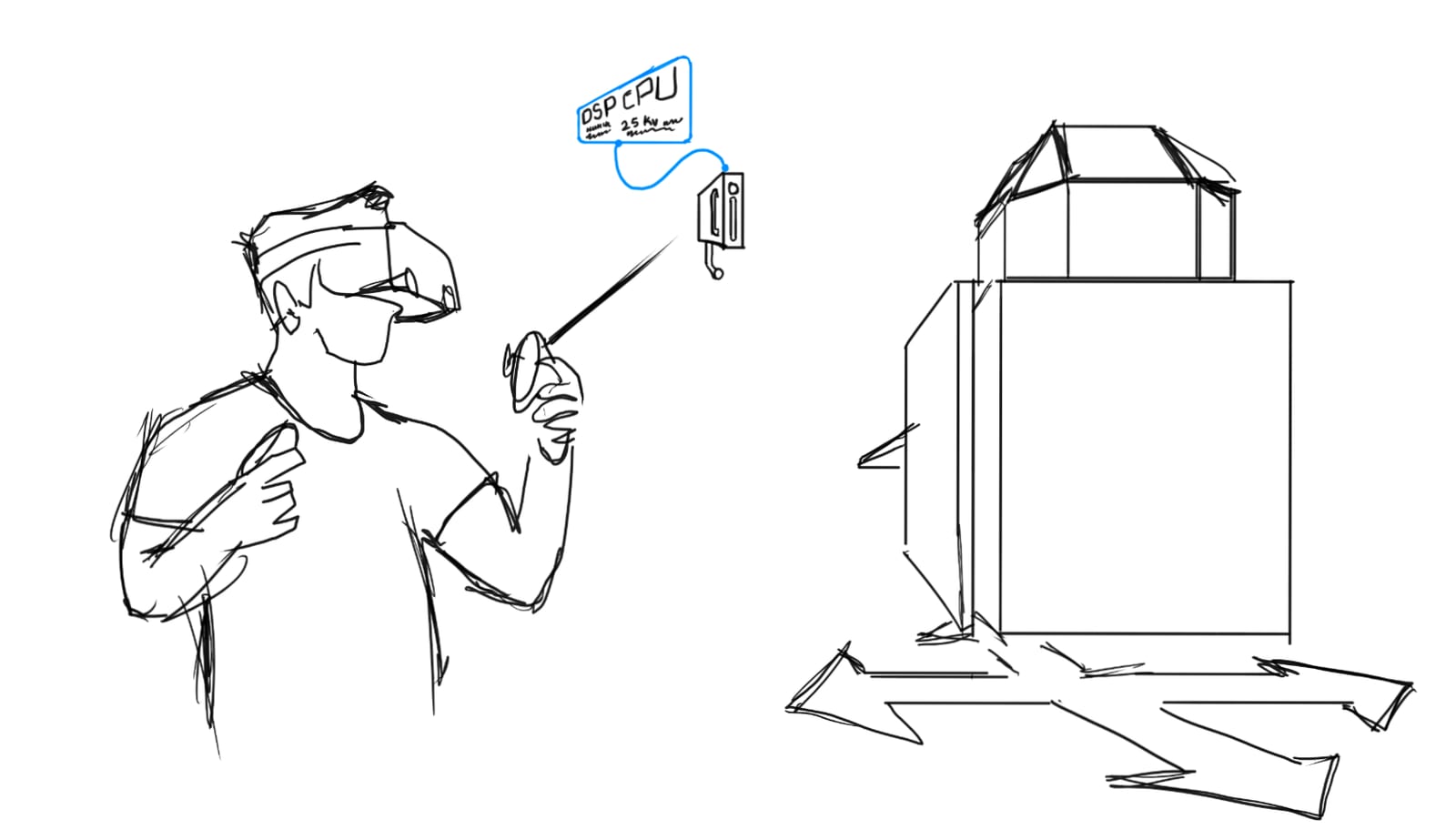
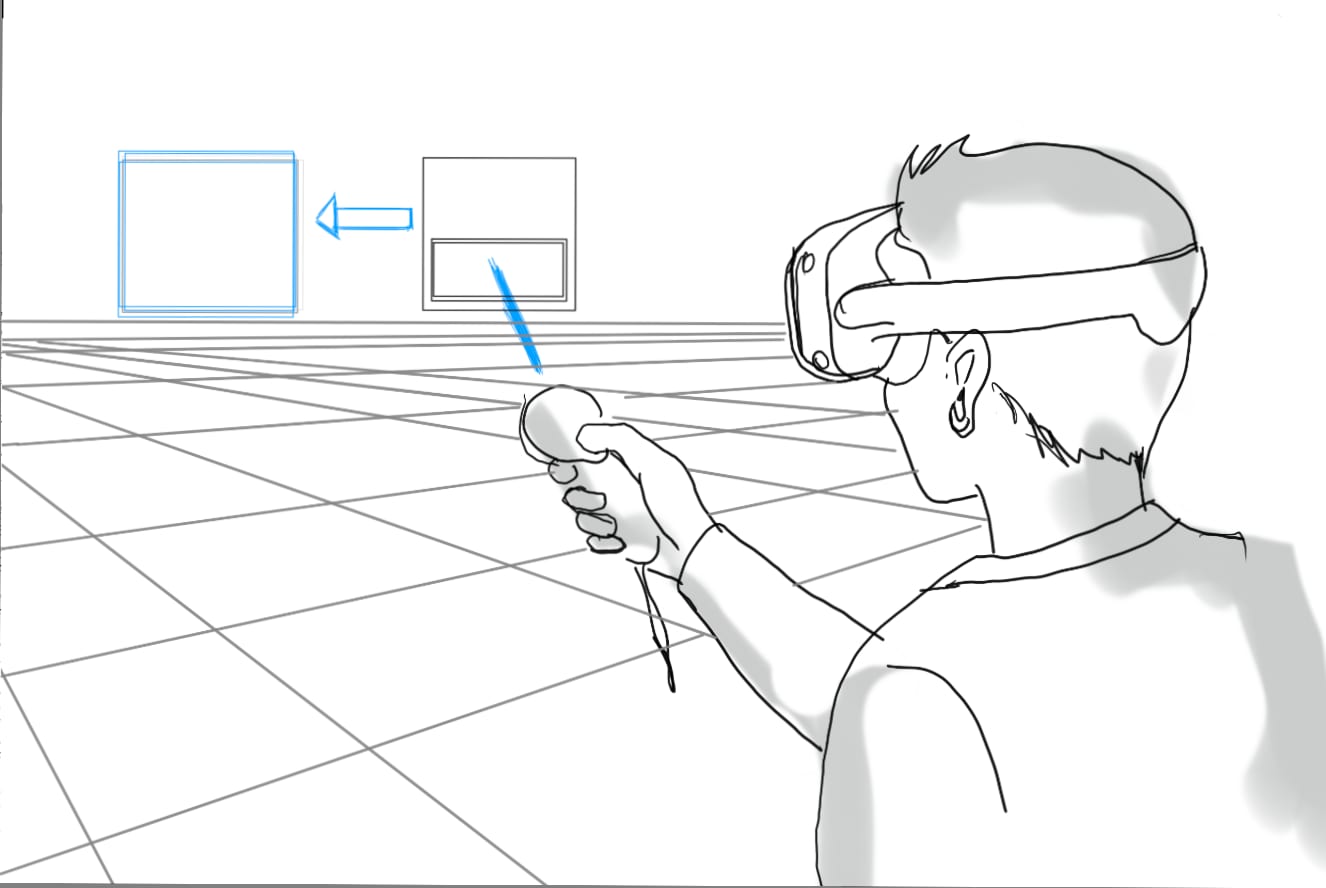
Learn by exploring.
Anchor information to components. Let learners take the structure apart and put it back together.
04 / ASSET DEVELOPMENT
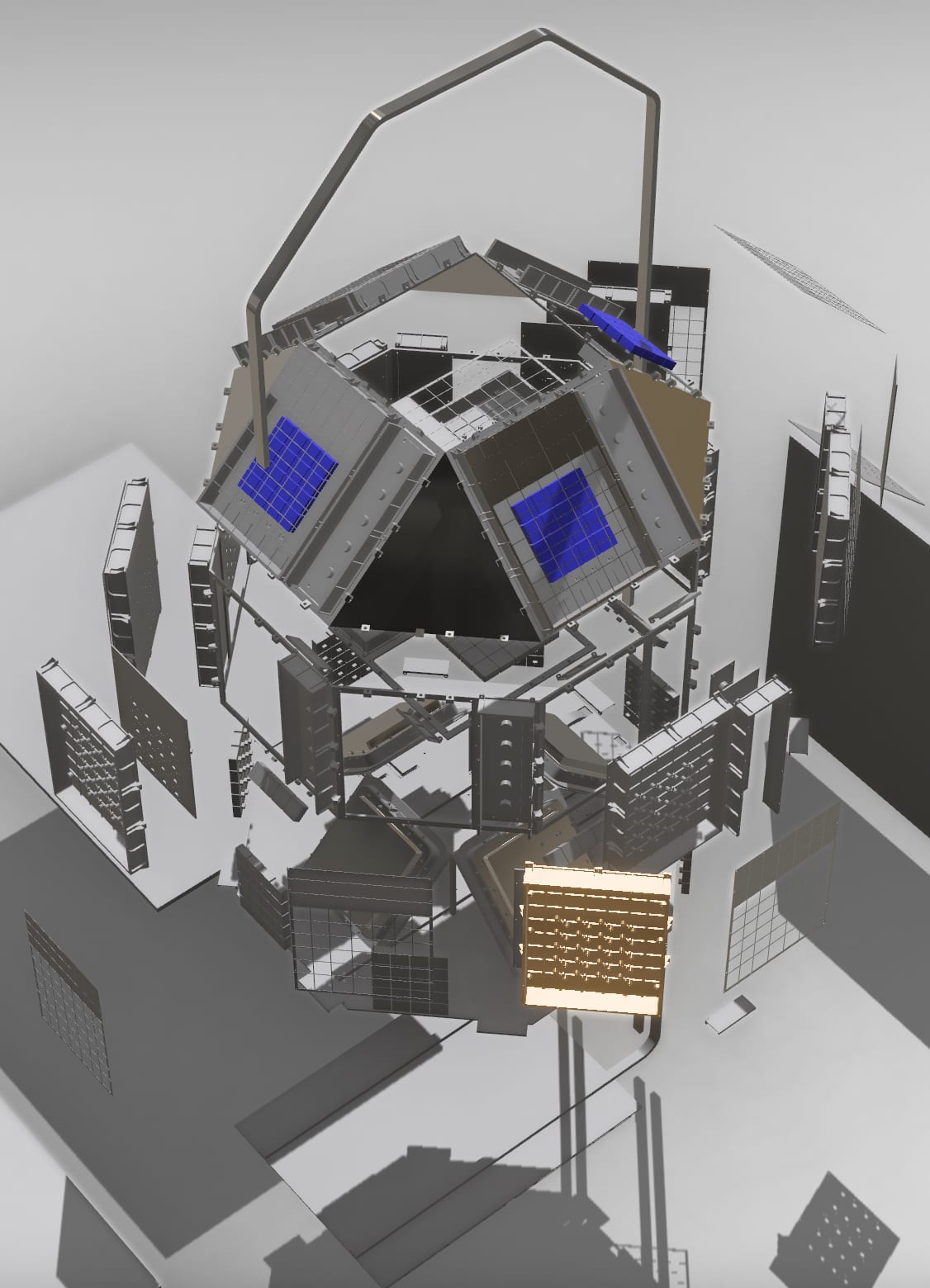
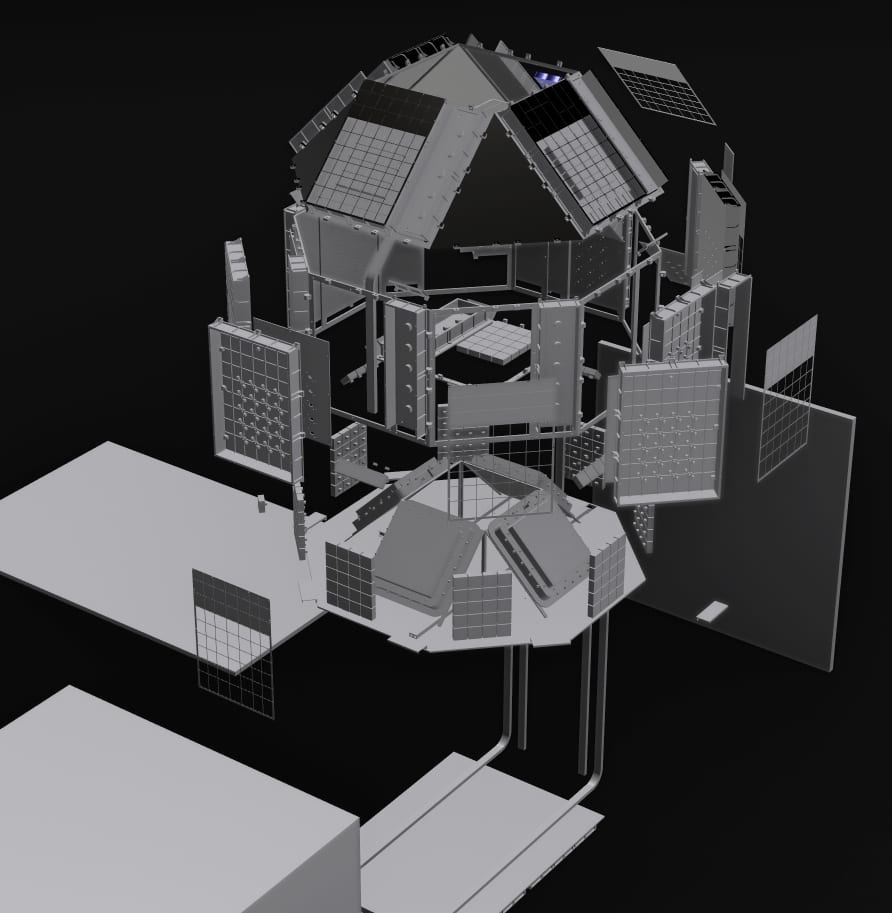
A structure you can inspect.
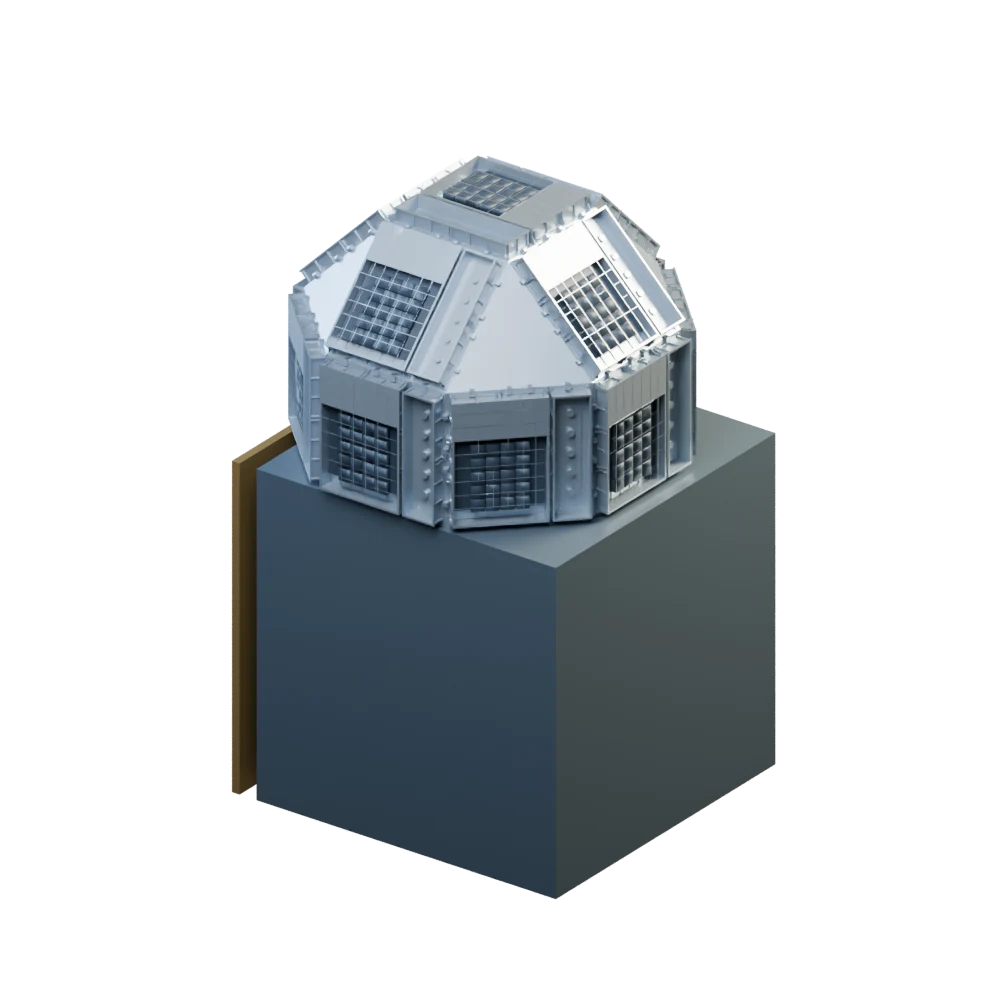
Satellite assets developed with the Daksha team, balancing technical correctness and visual clarity.
05 / ITERATION
Clearer ways in.
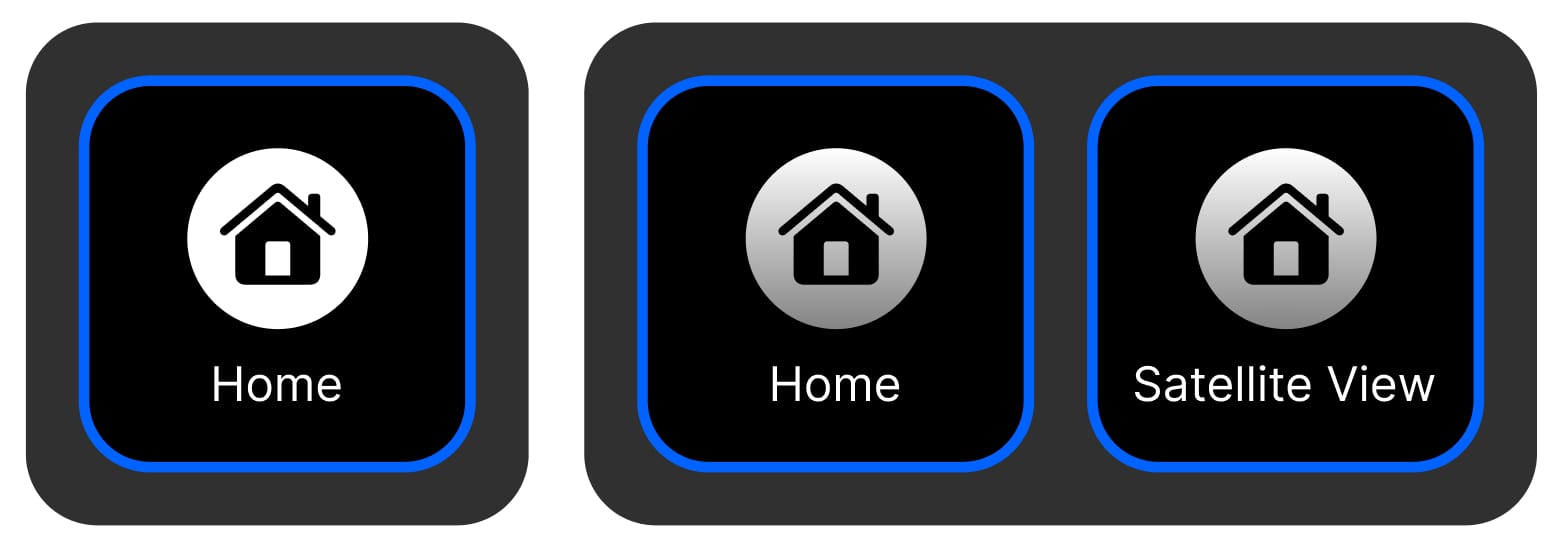
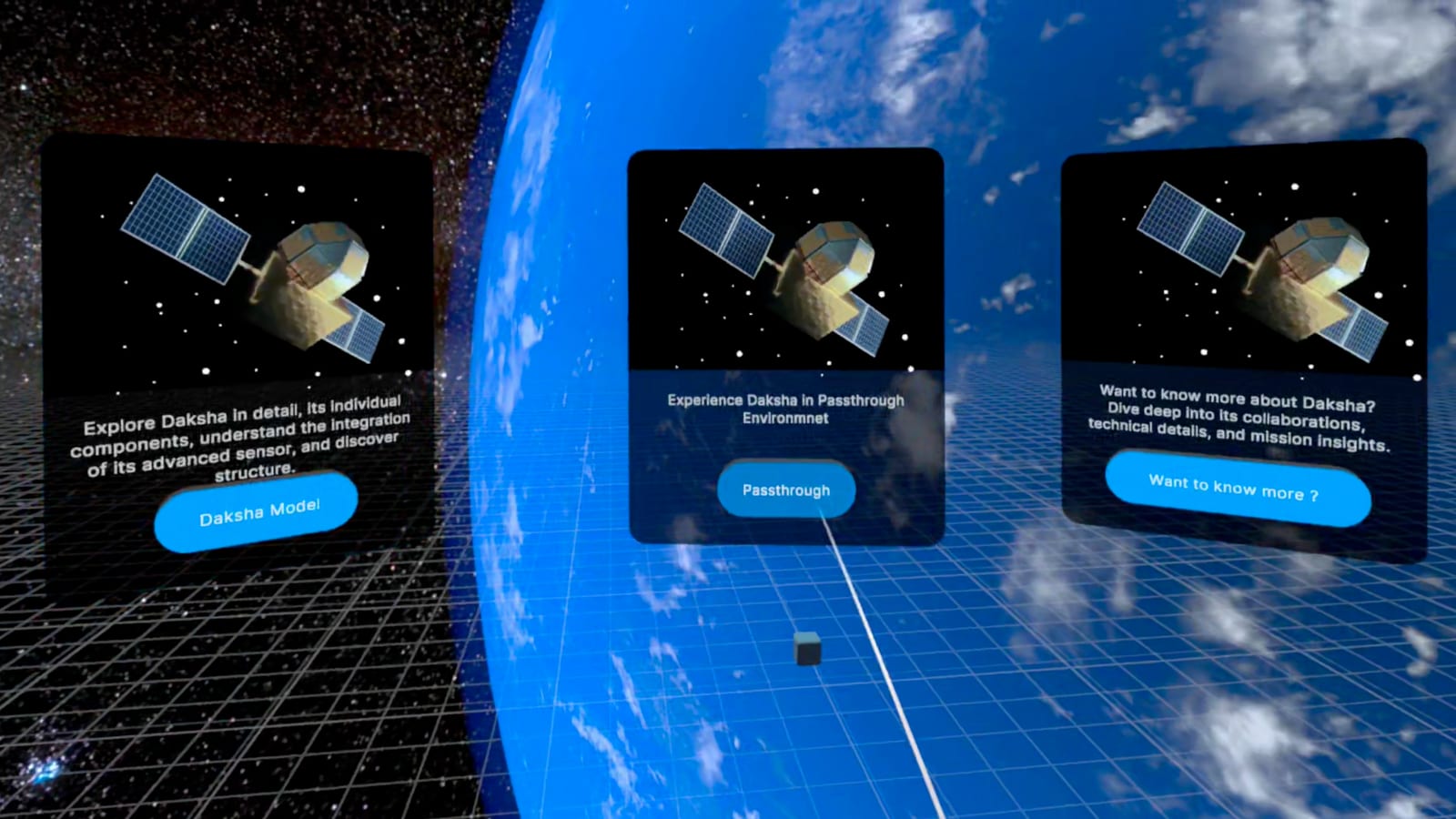
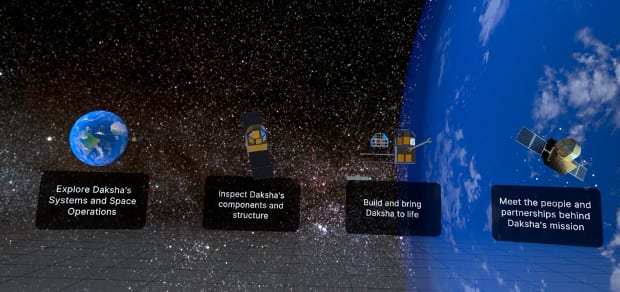
The entry menu evolved into four learning modes. Wrist-based controls keep navigation close at hand.
06 / THE EXPERIENCE
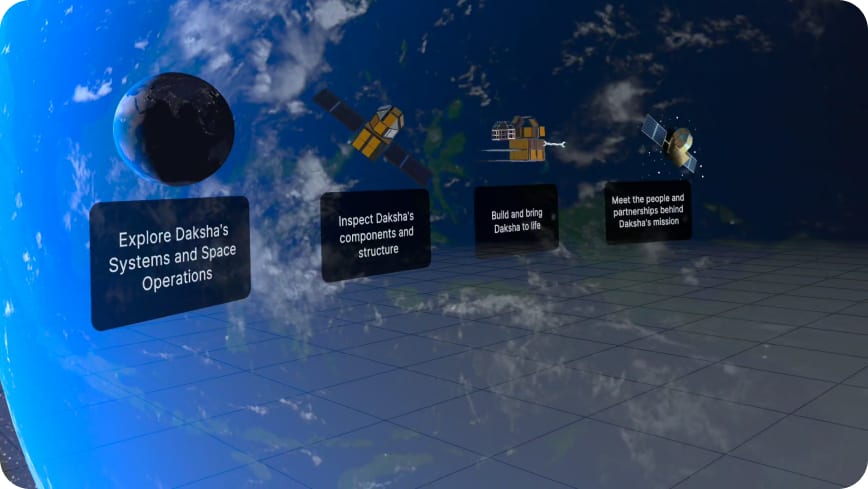
Four ways to understand Daksha.
Orbit, inspect, assemble, and discover the people behind the mission.
Explore Daksha
In orbit.
Rotate the satellite to explore its form and deployment configuration.
07 / CONTEXT
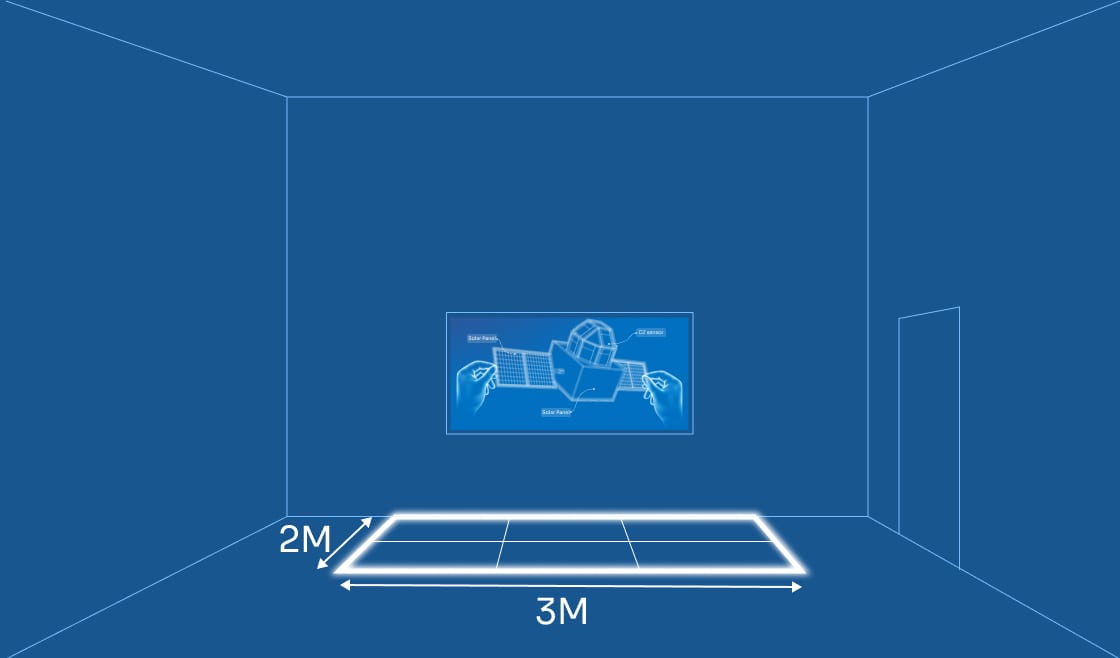
Designed for real spaces.
Compact layouts and stationary controls support classrooms, labs, and public outreach.
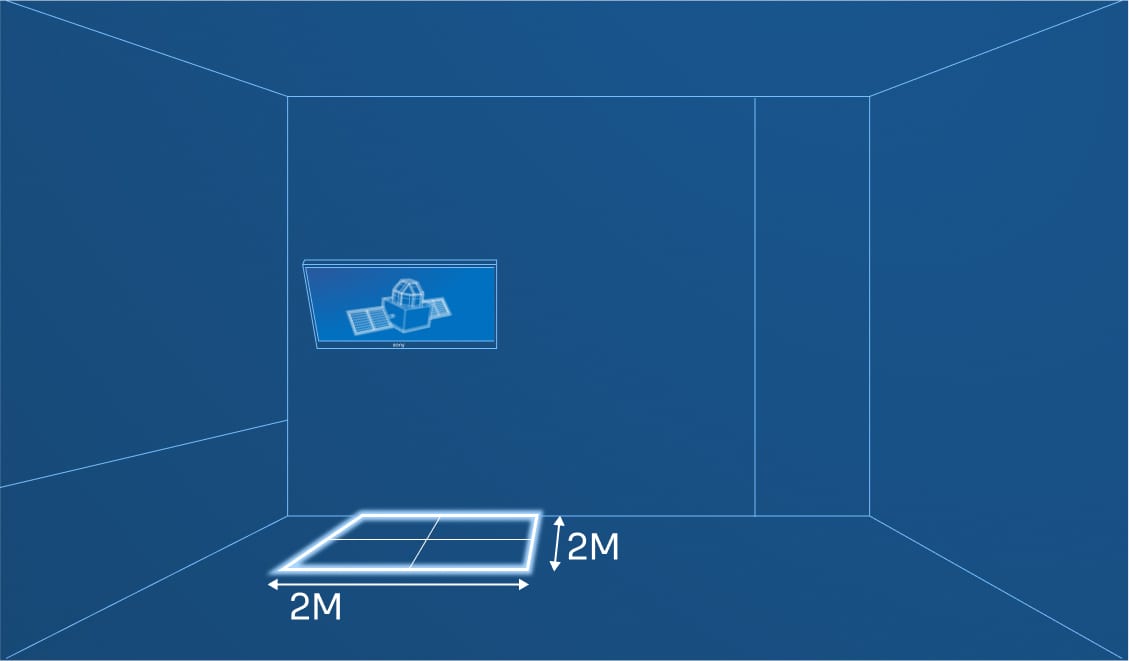
Laboratory
2 × 2 m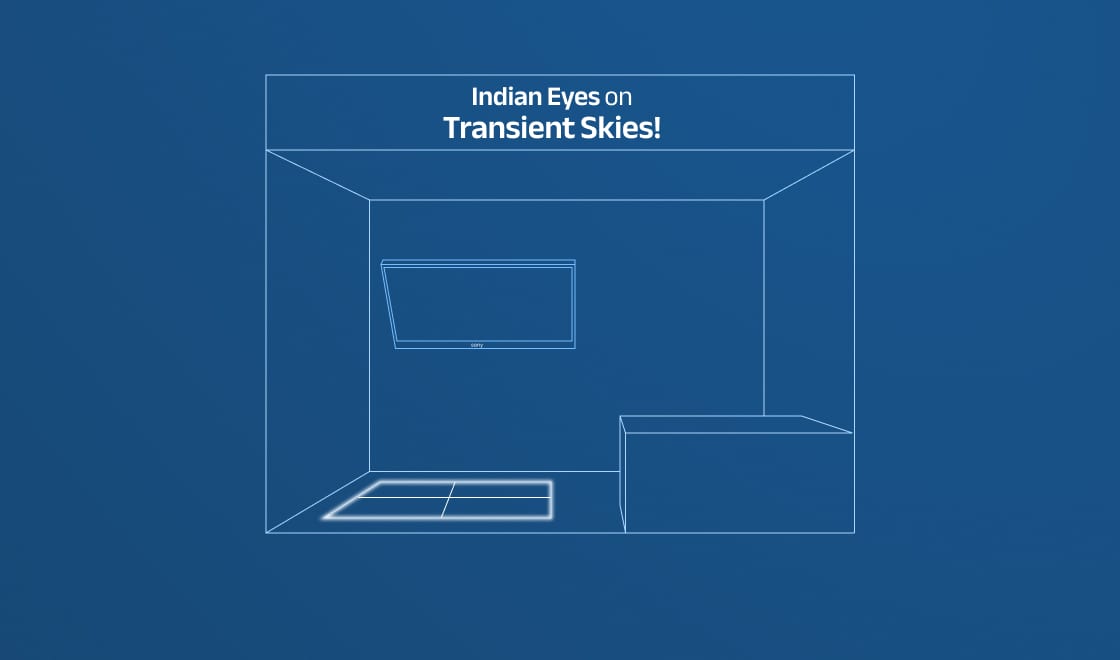
Exhibition
2 × 2 m08 / TESTING
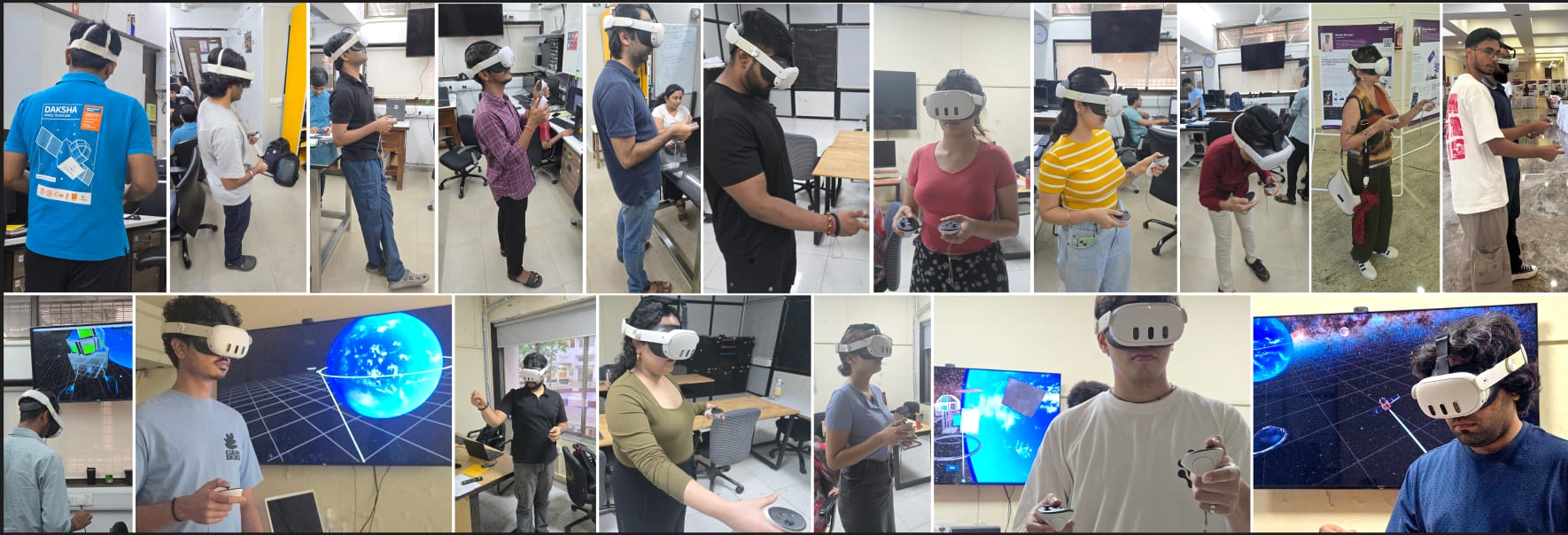
In people’s hands.
Headset sessions focused on understanding the structure, finding a way through, and comfort during use.
09 / NEXT STEPS
From structure to signals.
Future work explores moving a source around Daksha, with detector responses and live graphs explaining event localisation.
DAKSHA IN ORBIT / 2026Back to top ↑